Thick Film Hybrid Circuit Design & Manufacture

Custom Thick Film Hybrid Design & Manufacturing Since 1977

Thick Film Hybrid Specialists

Corintech has specialised in the design and manufacture of custom thick film hybrid circuits since 1977.

Using ceramic and metal substrates, our thick film capabilities support applications requiring high reliability, thermal performance and durability, with options including precision laser-trimmed resistors, wire bonding and encapsulation.

Discuss your thick film requirements with our UK team ->

What Are Thick Film Circuit Boards?

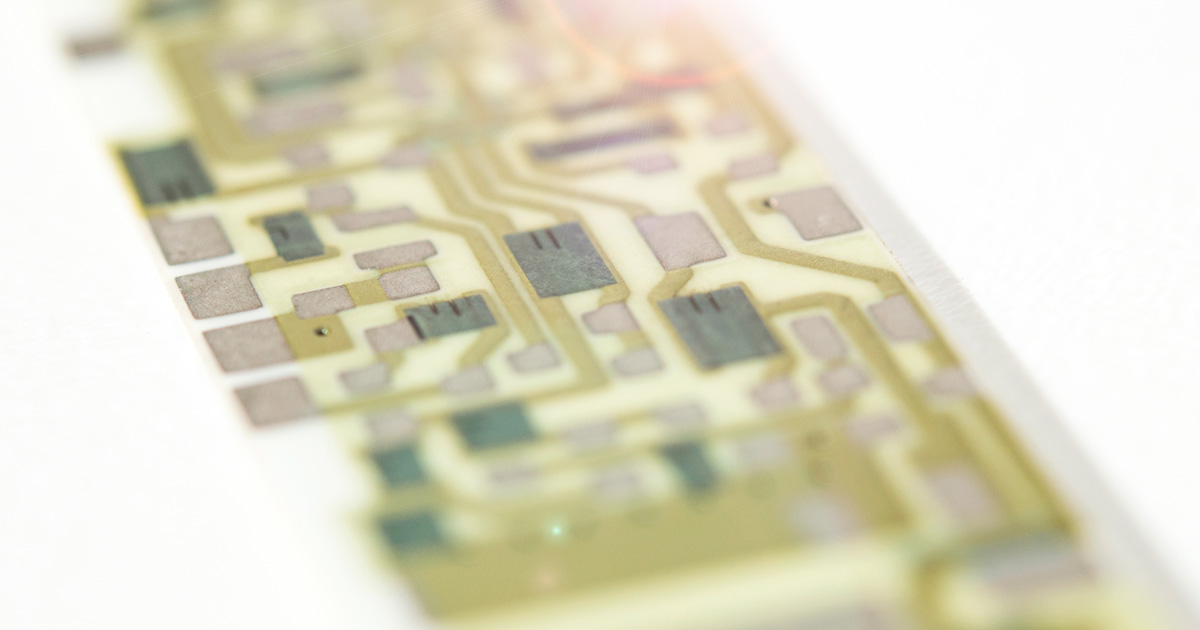
Thick film hybrid circuits are made using a print & fire (P+F) technique. This involves a combination of multi-layer screen printing of precious and semi-precious metals (Au, Ag, Pd), as well as the firing of tracks and precision resistors onto a range of ceramic and metal substrates. Surface mount components and bare die components with wire bonding can also be incorporated, and optional full encapsulation provides greater environmental protection. The use of different pastes allows the production of conductive tracks as well as resistors, which can be custom specified and then laser-trimmed to a high level of accuracy, offering an exact choice of value so that no compromise in design is necessary.
Corintech Thick Film Hybrid

What Are Thick Film Hybrids Used For?

Thick Film Hybrids are ideal for environments where a high level of reliability is needed as they can withstand a much wider temperature range and have higher durability than conventional PCB assemblies.

Thick Film technology is used extensively in aerospace, defence and automotive applications. However, its durable and reliable nature is starting to appeal to a broader market. As an experienced company in this technology, we are the perfect partner to develop and manufacture thick film circuit boards to suit any application.

What Are The Benefits Of Thick Film Hybrids?

Ceramic substrates provide a number of key advantages over standard FR4 based PCBs. One of the primary advantages is their thermal conductivity. For example, Aluminium Oxide (Alumina) offers an increase in thermal conductivity of approximately 20 times that of FR4, and Aluminium Nitride offers an increase of approximately 100 times.

Another advantage of ceramic substrates is that they offer extremely low thermal expansion properties. This makes them ideal for use in harsh environments where extremes of temperature are likely. The combination of low thermal expansion and high thermal conductivity ensures that not only is thermal expansion limited, but it is also evenly spread across the board, limiting the possibility that large amounts of stress will be exerted in specific areas.

Key Benefits:

  • High reliability for harsh environments
  • Flexibility to choose precise resistor values with active laser trimming
  • High voltage resistors
  • Extended temperature range performance
  • Improved thermal management
  • Excellent high-frequency performance
  • Low start-up costs
  • Fast lead time to prototype
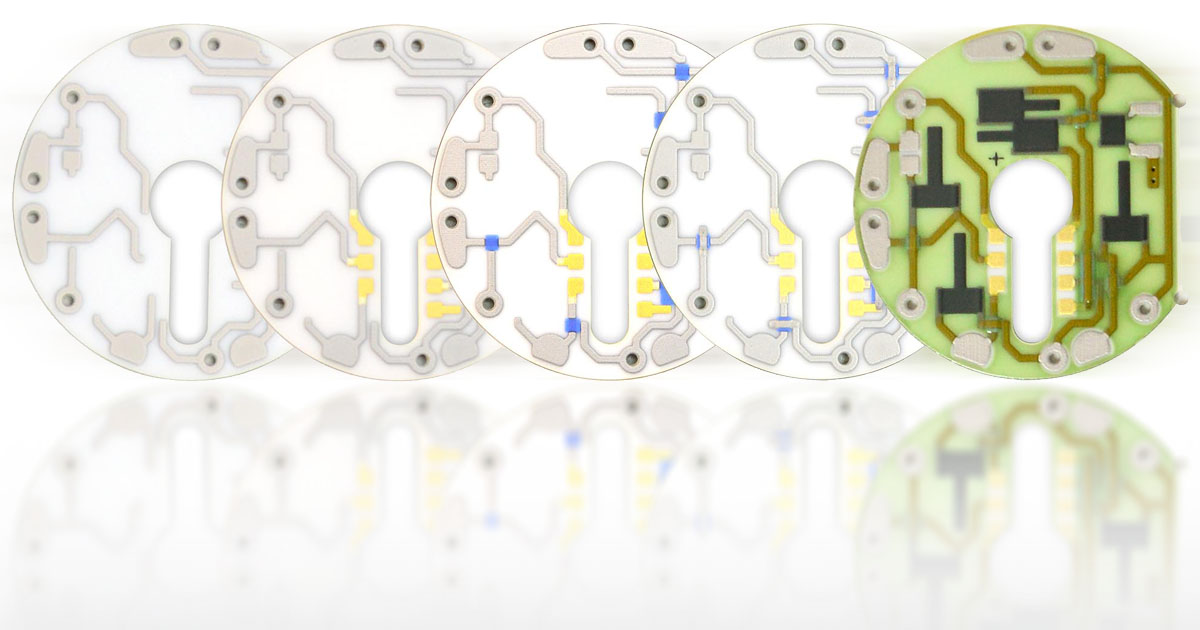
Hybrid Staged Process

What Substrates Can Be Used?

At Corintech, we are able to print circuits on the following substrates:

  • ADS-96R
  • ADS-996R
  • ADOS-90R
  • All Alumina
  • Aluminium Nitride
  • Quartz Substrates
  • Stainless Steel

Each substrate possesses unique properties, making them suitable for specific purposes. Contact our design team to discuss how you can best utilise thick film technology in your designs.

Custom Thick Film Hybrid Manufacturing

Every thick film application has different electrical, thermal and environmental requirements. Corintech’s design and manufacturing team can work with you to determine the appropriate substrate, circuit design and manufacturing approach for your application.

Our thick film capabilities can incorporate surface mount components, bare die with wire bonding, precision laser-trimmed resistors and encapsulation where required.

Corintech Logo

Request a Callback

Fill out the form below, and we will be in touch shortly.